
Historically, septic systems have been used to collect and treat wastewater on residential/business properties in the Swan Lake Corridor. 2015 and 2016 water quality assessments showed that many aging septic systems are leaking contaminants into Swan Lake. This contamination contributes to the degradation of water quality and bird habitat. Improved water quality would enrich fish and bird habitat and enhance recreational opportunities such as canoeing, kayaking, and fishing.
The North Okanagan Wastewater Recovery Facility will help protect Swan Lake water quality and support local agriculture with reclaimed water. The Township of Spallumcheen has also secured a 99-year lease for reclaimed water storage.
How will the system work?
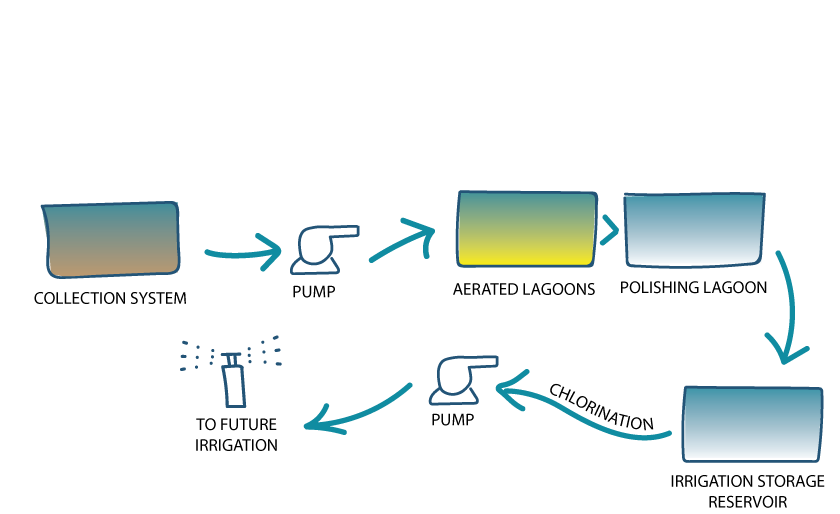
The wastewater recovery system will include collection and transmission infrastructure, a wastewater recovery facility, effluent storage ponds, and a irrigation and water re-use network.
The wastewater treatment plant will use partial mix aerated lagoons. Aerated lagoons are very effective at treating wastewater and are easy to operate. The water will then be disinfected with chlorine, making it suitable for agricultural irrigation.
What is wastewater?
Also known as sewage or liquid waste, wastewater is the untreated contaminated liquids and solids from homes and businesses (e.g., toilets, sinks, showers, washing machines). Contaminants must be treated by a septic system or treatment plant before they can be reused or disposed of.